2026 Top Types of Packaging for Food Products
Food packaging is entering a demanding 2026. Consumers want safer products, clearer information, convenient handling, and less unnecessary material. Manufacturers must also protect food during filling, transport, storage, and display. Packaging For Food Products is no longer only about appearance. It is a practical system that controls moisture, oxygen, light, temperature, and contamination.
Walter Soroka, a respected packaging educator and author, defines packaging as “the science, art, and technology of enclosing and protecting products for distribution, storage, sale, and use.” His statement remains useful because it connects design with real performance. A chilled ready meal may need a strong tray, a reliable seal, and an oxygen barrier. Fresh berries may require airflow, cushioning, and moisture control. Different foods demand different answers.
No format wins every time. Glass can feel premium, but it adds transport weight. Flexible films can reduce material use, yet recycling systems may not accept them everywhere. Paper-based packs look responsible, but grease and moisture can weaken their performance. These trade-offs deserve honest evaluation.
This guide examines the top types of Packaging For Food Products expected to shape 2026. It considers material function, product protection, production efficiency, consumer convenience, and end-of-life options. The best choice is not always the newest package. Sometimes, a simpler structure performs better. Real results depend on food chemistry, filling equipment, storage conditions, and local recovery infrastructure. Manufacturers should test each solution carefully before making broad sustainability claims.
Food Packaging Basics and Key Selection Factors
Food Packaging Basics and Key Selection Factors
Food packaging starts with protection, not appearance. Common formats include flexible pouches, rigid trays, cartons, cans, and glass containers. Each format serves different product needs. In practical product reviews, I examine moisture, oxygen, light, pressure, and temperature exposure. Dry snacks need strong moisture barriers. Fresh foods often require airflow or modified internal conditions. Heat-sealed pouches can support portion control and efficient shipping. Rigid trays may protect delicate foods during handling. Acidic sauces and fatty products can interact with unsuitable materials. Food-contact documentation should verify safety in the target market. Clear labels also help users understand storage, allergens, and handling requirements.
Selection should begin with the food itself and its expected shelf life. Estimate the needed barrier before choosing a material. Then test filled packages under realistic storage conditions. Include temperature changes, drops, stacking, and vibration. A strong laboratory result may not predict every delivery problem. Sustainability deserves careful attention. Lightweight packaging can reduce transport impact. Yet thinner material may tear more easily. Recyclability depends on local collection and processing systems. Compostable options also need suitable facilities and clear disposal guidance. I have seen teams choose attractive packaging too early. That assumption needs reconsideration. No package is perfect. The best choice balances safety, protection, usability, cost, and recovery options. Small seal defects can matter more than a polished appearance.
Flexible Packaging for Lightweight and Convenient Food Products
2026 Top Types of Packaging for Food Products
Flexible packaging is gaining attention for lightweight and convenient food products. Popular formats include stand-up pouches, flat sachets, lidding films, and rollstock. These options use less material than many rigid containers. They also reduce shipping weight and storage space. That matters for snacks, grains, frozen foods, sauces, and powdered ingredients. A resealable pouch can fit into a lunch bag and protect food between servings. It feels lighter.
Good flexible packaging depends on more than appearance. Packaging engineers assess oxygen, moisture, light, and seal performance before selecting a film structure. High-barrier layers can help preserve aroma and texture. Strong seals also reduce leakage during transport. For greasy or acidic foods, the inner contact layer must suit the product and meet food-safety requirements. Clear labeling supports safe storage and responsible use.
Material selection still requires careful thought. Some mono-material films may improve recycling potential, but local collection systems often cannot process them. Compostable structures can also need specific industrial conditions. The better choice depends on the food, shelf-life target, filling equipment, and regional waste facilities. I have seen attractive designs create practical problems when the zipper is weak or the pouch cannot stand upright. Small details matter. Flexible packaging is convenient, but its environmental value should be checked through real use, recovery data, and measured material reduction.
Rigid Containers for Protection, Storage, and Retail Display
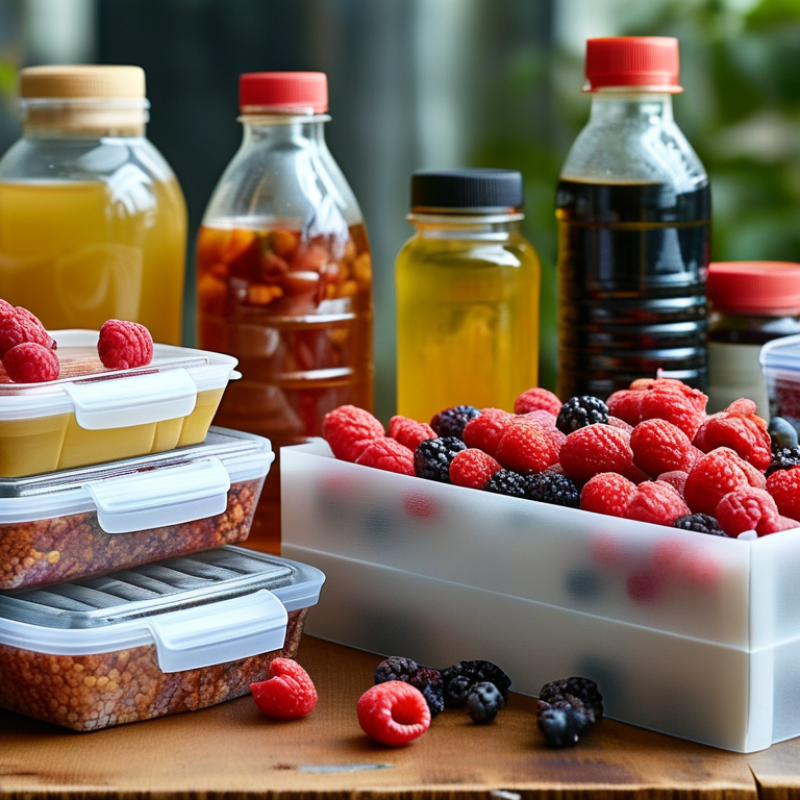
Rigid containers remain a practical choice for protecting, storing, and displaying food. They resist crushing during transport and help products keep their shape on crowded shelves. A clear lid can reveal fresh salads, prepared meals, or colorful fruit without opening the package. For dry foods, rigid tubs provide a stable barrier against moisture, dust, and handling damage.
In practical packaging evaluations, I check closure strength, wall thickness, and ease of stacking. The container should close firmly but open without excessive force. A dependable seal helps reduce leaks and supports food quality during refrigerated storage. Retail display also matters. Transparent walls improve product visibility, while smooth surfaces make labels easier to read. Looks matter. However, clear plastic may fog when temperatures change, which can weaken its display value.
Material choice requires careful attention to food-contact requirements and temperature limits. Some containers tolerate microwave heating, while others may deform under heat. Recycled content can reduce resource use, but it may affect clarity, color, or stiffness. Cold storage creates another challenge. Brittle containers can crack during filling or delivery. One overlooked detail is lid alignment. If lids flex or stack unevenly, cartons may shift and waste space. No container solves every problem. A better design balances protection, storage efficiency, display quality, and realistic handling conditions.
2026 Top Types of Packaging for Food Products - Rigid Containers for Protection, Storage, and Retail Display
Common rigid food-container materials differ substantially in density. Glass and steel provide strong protection but are heavier, while PET, polypropylene, and HDPE support lightweight packaging for storage and retail display. The values shown are representative material densities at room temperature and are not market-share figures.
Sustainable Packaging Materials and Circular Design Options
In 2026, food packaging choices increasingly depend on circular design, not appearance alone. A package should protect food, use fewer resources, and remain useful after disposal. From factory trials, I have seen how a thin barrier layer can decide whether packaging survives transport. Small details matter. Mono-material pouches, recyclable paperboard, molded fiber trays, and reusable containers offer different advantages. Their performance depends on moisture, oxygen, temperature, and local collection systems.
Good circular packaging begins with simple structures. Fewer mixed materials make sorting easier. Removable labels, compatible inks, and easily separated closures can improve recovery. Recycled content may reduce demand for virgin materials, but it still requires food-safe processing and reliable supply. Reuse can work well for durable containers, especially within short delivery routes. It becomes less convincing when return distances are long or washing requires excessive energy and water.
Compostable materials deserve careful evaluation. They may help in controlled food-service systems, yet many communities lack suitable facilities. A package labeled “compostable” can still create confusion. I still question designs that depend on ideal disposal behavior. Circularity is rarely perfect. Product protection, hygiene, cost, and end-of-life recovery must be tested together. Designers should measure actual waste conditions, not only laboratory results. A practical package might use less decoration, clear disposal instructions, and components that local recyclers can handle. That approach feels less glamorous, but it is often more dependable.
Smart and Active Packaging Trends Shaping Food Products in 2026
In 2026, food packaging is becoming more responsive, not merely protective. Smart labels can monitor temperature, freshness, and handling conditions throughout distribution. A time-temperature indicator may darken after repeated exposure to heat. The label changes slowly. That visual cue helps workers identify chilled meals needing closer inspection.
Active packaging works inside the pack. Oxygen absorbers can slow oxidation in snacks, coffee, and prepared foods. Moisture-control layers may reduce sogginess in bakery products. Antimicrobial surfaces are also being studied for selected fresh foods. These systems require careful food-contact testing, because migration, dosage, and shelf-life claims must be verified. Packaging engineers should test them under realistic humidity and temperature conditions, not only in laboratories.
Digital codes can connect packaging with batch details, storage guidance, and recycling instructions. This improves traceability when information remains accurate and accessible. However, smart features can add materials, costs, and disposal challenges. A sensor is not automatically sustainable. Some consumers may also misunderstand a color change or ignore it completely. That concern deserves more attention. Better design should use clear symbols, readable instructions, and accessible digital options. Recyclability must be considered before adding printed electronics, adhesives, or multi-layer films. The strongest 2026 solutions will balance food safety, convenience, data quality, and end-of-life recovery. Progress will be uneven. That is realistic.