
Choosing the right Coffe Packaging Bags is not a cosmetic decision. It affects aroma, shelf life, handling, and customer trust. The National Coffee Association’s 2024 National Coffee Data Trends report found that 67% of American adults had consumed coffee within the past day. That habit creates constant demand for packaging that protects freshness from roasting room to kitchen shelf.
Coffee loses quality through oxygen, moisture, light, and heat. A practical bag should match the roast profile, filling process, and expected storage period. For example, a light-roast coffee may need strong oxygen and moisture barriers, while a high-volume product may require faster sealing and simpler handling. A one-way degassing valve can release carbon dioxide without allowing air inside. Small details matter.
The Sustainable Packaging Coalition and Smithers’ packaging research both emphasize material reduction, recyclability, and responsible design. However, sustainability claims need evidence. A recyclable-looking pouch is not automatically recyclable in every local system. Check the material structure, adhesive choices, valve design, and available collection facilities. No package is perfect.
This guide presents seven practical tips for evaluating Coffe Packaging Bags. It considers barrier performance, bag format, printing quality, food-contact safety, sealing reliability, sustainability, and total cost. Test samples before placing a large order. Hold a filled bag under bright light. Inspect the seal. Smell the coffee after storage. These simple checks can reveal problems that attractive product photos hide. The best decision combines supplier documentation, packaging tests, production experience, and honest review.
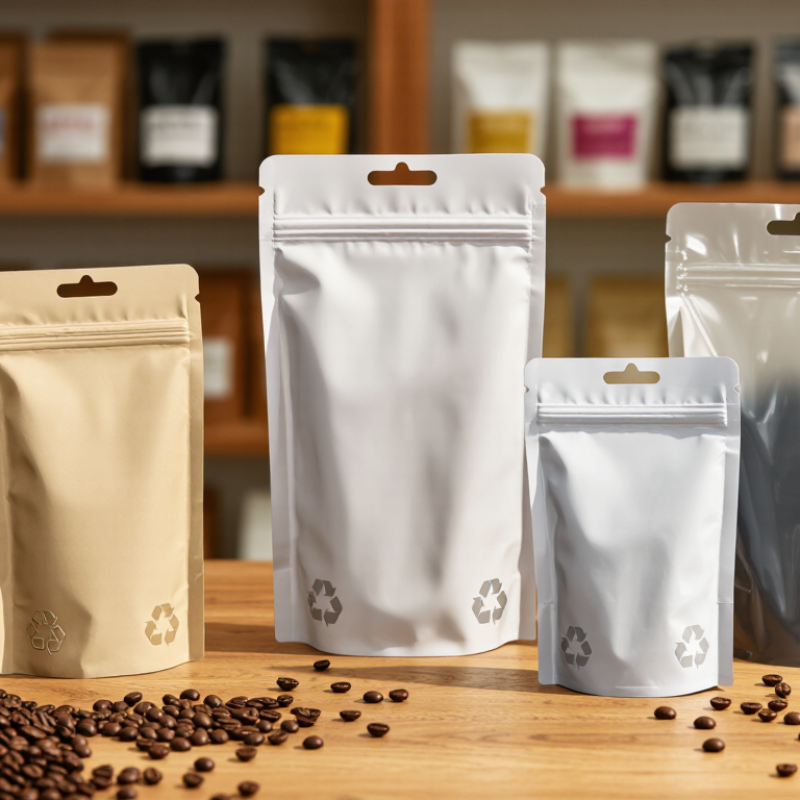
7 Tips for Choosing Coffee Packaging Bags
Understanding Coffee Packaging Requirements
Choosing coffee packaging bags starts with the coffee itself, not the artwork. Freshly roasted beans release carbon dioxide for days. A one-way degassing valve can release pressure without allowing oxygen inside. Ground coffee usually loses aroma faster, so it needs stronger barrier protection. Ask how long the product will sit before sale. That answer changes the bag requirement. A thin package may look acceptable on a shelf, yet fail during transport.
Light, oxygen, moisture, heat, and pressure all affect coffee quality. Use a tested barrier structure that matches the roast and distribution route. Dark roasted beans often release gas more actively. A larger bag may need a wider seal and a reliable valve. Check seal strength after filling, not only before production. Drop tests and short storage trials can reveal weak corners, leaking seals, or crushed panels. These details matter more than attractive printing. One simple overnight test can expose careless assumptions. It is not perfect.
Choose the format according to customer use. Flat-bottom bags stand well, while pouches save space during shipping. Confirm the fill weight, scoop access, zipper performance, and resealing feel. The inner surface should not transfer odors to the beans. Request material specifications, food-contact documents, and barrier test results from the supplier. Also check whether the packaging fits local recycling guidance. Claims need evidence. A supplier who explains limitations is usually more dependable than one promising everything. Leave enough time for sampling, because the first sample may be wrong.
7 Tips for Choosing Coffee Packaging Bags
Selecting the Right Bag Material and Barrier Properties
Coffee loses freshness when oxygen, moisture, light, and heat enter the package. Choose a structure that matches the roast, filling method, and storage period. Paper can improve appearance, but it usually needs protective inner layers. Plastic films, aluminum layers, and coated materials offer different barrier levels. Ask suppliers for measured oxygen transmission rate and moisture vapor transmission rate. Lower numbers usually provide stronger protection. Low OTR matters.
Check light protection carefully, especially for clear or lightly printed bags. Dark roasted coffee can release gas after packing, so a suitable one-way valve helps prevent swelling. Inspect the valve’s seal and position. A strong material cannot compensate for a weak closure. Test zipper performance, heat-seal strength, and leak resistance on filled bags, not empty samples.
I once treated a low OTR figure as proof of success. It was not. Poor seals and rough handling still shortened freshness. Run practical trials at different temperatures and check aroma, flavor, and package shape over time. Request material specifications, food-contact documentation, and batch consistency records. Recyclability claims also need careful review because multilayer barriers can complicate local recovery systems. The most reliable choice balances barrier performance, sealing behavior, filling speed, and disposal conditions.
Choosing coffee packaging requires more than attractive printing. I test filled bags with real beans, not empty samples. A 250-gram roast may fit one package, while a dense dark roast needs less internal space. Leave enough headroom for sealing, but avoid excessive air. Too much unused space can make the bag look careless and increase storage problems.
Flat-bottom bags stand upright on shelves and offer strong branding space. Side-gusset bags suit larger quantities and stack efficiently in cartons. Stand-up pouches work well for smaller batches and online orders. Measure the packed coffee, sealing area, and outer dimensions together. I once selected a narrow bag that looked elegant but trapped beans near the zipper. It was a poor practical choice.
Closure selection affects daily use. A reliable zipper helps customers reseal the bag after opening. A heat seal gives stronger protection during transport. One-way degassing valves can release carbon dioxide from freshly roasted coffee while limiting outside air. The valve position matters, especially when the bag is folded or displayed upright. Test opening force, seal strength, and leakage before ordering at scale. Small errors become expensive. Packaging should also match the customer’s routine, storage space, and expected consumption speed. A large bag may reduce material per kilogram, but it can leave coffee open too long in a small household.
Freshness starts with controlling oxygen, moisture, light, and aroma loss. The International Coffee Organization reported global coffee consumption of 177.9 million 60-kilogram bags in 2023/24. That scale makes packaging performance more than a design choice. It becomes a quality-control issue. The National Coffee Association’s Spring 2024 report found that 67% of American adults drank coffee during the previous day. More coffee is being consumed at home, where storage conditions vary widely.
Tip 1: Choose a high-barrier laminate with tested oxygen and moisture resistance. Ask for laboratory results, not vague claims.
Tip 2: Use a one-way degassing valve for freshly roasted beans. It releases carbon dioxide while limiting oxygen entry. A valve is not magic. Poor sealing can still flatten the aroma.
Tip 3: Match the bag size to the usage cycle. A small household may lose freshness before finishing a large pouch. I have seen attractive bags fail because their seals were weak near the corners.
Functionality also affects daily handling. A reliable zipper should close without crushing grounds. Clear tear notches help, but they can weaken the top seal if poorly engineered. The Smithers flexible-packaging outlook identifies barrier performance, lightweighting, and seal integrity as continuing industry priorities.
Tip 4: Test the bag after filling, dropping, and repeated opening.
Tip 5: Check whether the structure protects beans during transport and shelf storage.
Tip 6: Consider recyclable or lower-material formats, but verify their real barrier data first.
Tip 7: Print roast date, storage guidance, and a clear resealing instruction. Small details matter.
7 Tips for Choosing Coffee Packaging Bags?
Balancing Sustainability, Branding, and Budget
Coffee packaging is a daily negotiation between freshness, visual identity, and cost. Start by matching the bag’s barrier performance to the coffee’s shelf life, roast level, and shipping conditions. A strong oxygen and moisture barrier protects aroma, but excessive material can weaken sustainability claims. Ask suppliers for food-contact documentation, recyclable-content details, and realistic end-of-life guidance. “Eco-friendly” is too vague without evidence.
Choose a format that supports your brand without wasting money. A clean label, consistent color, and readable roast information often outperform complicated artwork. Test how the bag looks under café lighting and feels in a customer’s hand. My first packaging trial looked attractive, but the matte surface showed fingerprints quickly. That small flaw affected the shelf appearance. Details matter.
Compare the full cost, not only the unit price. Include printing plates, minimum order quantities, freight, storage space, and rejected bags. A lightweight design may reduce shipping costs, yet it can crease during filling. Request samples and run practical tests with real coffee. Check seal strength, zipper performance, valve placement, and filling speed. Choose a supplier that shares test methods and responds clearly to weaknesses. Cheap is not always efficient. Sustainable materials can also require different sealing temperatures or machinery settings. Leave room in the budget for adjustments, because the perfect balance rarely appears in the first production run.
| Tip | Decision Area | Key Data Dimension | Recommended Direction | Sustainability, Branding, and Budget Trade-Off | Practical Buying Action |
|---|---|---|---|---|---|
| 1 | Protect coffee freshness first | Critical barrier needs Oxygen, moisture, light, and aroma protection | High protection Use a high-barrier structure with a heat-sealable inner layer and a one-way degassing valve for roasted whole-bean coffee. | High-barrier multilayer bags generally offer stronger protection but are more difficult to recycle than simple single-material structures. | Request oxygen transmission rate, water vapor transmission rate, seal strength, and valve specifications from the supplier. |
| 2 | Match the bag to the coffee format | Product type Whole beans, ground coffee, capsules, or single-serve portions | Format-specific design Choose stronger barrier protection and a reliable valve for whole beans; use finer seals and higher puncture resistance for ground coffee. | A technically optimized structure can reduce waste from staling or leakage, even if its unit price is slightly higher. | Test the actual coffee product in the final bag format under expected storage and transport conditions. |
| 3 | Evaluate sustainability by material system | End-of-life route Recyclable, compostable, reusable, or landfill disposal | Prioritize simplicity Consider a mono-material polyethylene or polypropylene structure where suitable recycling collection and processing exist. | A package labeled recyclable is only practically recyclable when local collection, sorting, and reprocessing infrastructure accepts that format. | Confirm local disposal guidance and obtain written material composition and recyclability documentation. |
| 4 | Treat compostable packaging carefully | Certification and facility access Industrial composting requirements and accepted materials | Use selectively Choose compostable structures only when certified for the intended market and supported by a realistic commercial composting route. | Compostable bags may support a sustainability message, but they can require specific facilities and may not provide the same barrier performance as conventional high-barrier bags. | Verify recognized certification, disposal instructions, shelf-life performance, and compatibility with the coffee product. |
| 5 | Balance print quality with material efficiency | Branding footprint Print coverage, ink system, finishes, and label area | Efficient branding Use clear hierarchy, limited ink coverage, and a compact label or controlled-color design when appropriate. | Matte coatings, metallic effects, and extensive finishes can improve shelf impact but may increase cost and complicate recycling or material separation. | Compare a full-print bag with a reduced-print option using the same shelf-life and functional specifications. |
| 6 | Control total packaging cost | Total cost per saleable unit Bag, valve, zipper, printing, tooling, freight, testing, and waste | Compare total cost Evaluate unit price together with minimum order quantity, setup charges, lead time, inventory risk, and product-loss risk. | The lowest bag price may create higher costs through excess inventory, obsolete artwork, poor shelf life, damaged shipments, or large minimum orders. | Ask suppliers for a landed-cost comparison at three order volumes, such as 5,000, 25,000, and 100,000 bags. |
| 7 | Validate performance before scaling | Quality and compliance checks Seal integrity, drop resistance, migration compliance, shelf life, and artwork accuracy | Test before launch Approve a production-representative sample and conduct filling, sealing, transport, and storage tests before placing a large order. | Testing adds time and upfront cost, but it lowers the risk of recalls, leaking bags, incorrect labels, and premature coffee quality loss. | Record acceptance criteria and require a signed production sample before mass manufacturing. |
CONTACT US
|
