
Sandwich cakes depend on more than a reliable oven. Cream layers must stay even, sponge sheets need consistent thickness, and cooling time affects clean slicing. These details make a Sandwich Cake Machine a production decision, not just a purchase. Grand View Research’s Bakery Products Market report estimated the global bakery products market at about USD 480.7 billion in 2023 and forecast continued growth through 2030. That figure describes the wider product market, not machine sales. Still, it points to sustained demand for bakery capacity and repeatable output. That distinction matters.
This guide introduces ten Chinese manufacturers and considers the evidence buyers can check: machine configuration, stated capacity, product range, customization, documentation, and after-sales support. A useful comparison should examine the full line, from batter depositing and baking to cooling, cream filling, cutting, and packaging. On a factory floor, small gaps between these stages can cause uneven layers or unnecessary stoppages. Specifications alone do not prove performance. Ask for trial-run results, sample products, and clear details about changeover and cleaning. The list is an industry overview, not an independently audited ranking; manufacturer claims and available information may change. Some comparisons will remain imperfect. Treat them as starting points, then verify the fit with your recipe, space, and production targets.
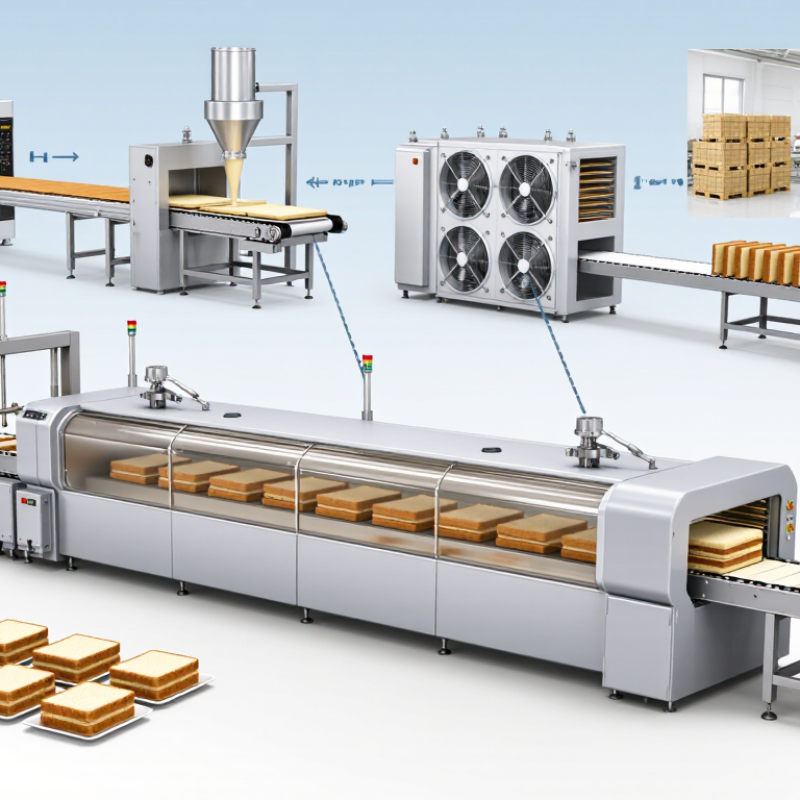
Sandwich cake machines turn a layered baking process into a controlled production line. Depending on the setup, equipment can deposit batter, bake cake sheets, apply filling, stack layers, and cut finished portions. This helps manufacturers keep cake thickness and filling distribution more consistent across large batches. A thin cream layer can affect both appearance and stability. Small differences matter.
The machine is only one part of the process. Batter temperature, sheet moisture, filling viscosity, and cooling time all influence the final product. If cake sheets are too warm, filling may soften or slide. If they are too dry, cutting can cause crumbling. Operators still need to check samples and adjust settings; automation does not remove the need for judgment. Some production lines also require careful changeovers when recipes or cake sizes vary.
Tips: Test a full batch before increasing speed. Check layer alignment, cut edges, and filling weight. Clean product-contact parts according to the equipment instructions, and record settings that produce reliable results.
When comparing industrial machines, consider the whole workflow, not just hourly output. Available floor space, washdown needs, operator training, and access to replacement parts can shape daily performance. A faster line is not always better if it creates more waste or difficult maintenance. There is no single ideal setup; the right choice depends on the recipe and production volume.
A sandwich cake machine builds consistency through controlled batter depositing, baking, cooling, filling, and cutting. A calibrated depositor spreads batter evenly across the oven band, while steady belt speed helps each sponge sheet bake for a repeatable time. Sensors can flag temperature or speed drift before it creates pale edges or dry centers. Small variations matter. Even a slightly uneven sheet can leave a visible gap when the layers are stacked.
After cooling, guides align the sponge sheets, and metered pumps apply filling at a controlled thickness. This helps limit sliding and uneven bites. Still, machinery cannot correct poorly mixed batter or filling with changing viscosity. Operators need to check deposit weight, sheet thickness, oven temperature, and layer alignment during production. The UNEP Food Waste Index Report 2024 estimates that 1.05 billion tonnes of food were wasted worldwide in 2022. That figure covers all food sectors, not cake lines, but it underlines why avoidable rejects deserve attention. Consistent settings can reduce process variation, though each recipe and line still needs practical trials. A neat stack is not proof of a perfect bake.
The table below compares ten key machine functions and production controls used in sandwich cake lines. It describes general equipment considerations, not a verified ranking of individual manufacturers; actual specifications depend on the product, recipe, and line configuration.
| No. | Machine Function | Role in Layered Cake Production | Consistency Control | Practical Verification |
|---|---|---|---|---|
| 1 | Batter Depositor | Deposits batter onto trays or a continuous baking surface to form cake layers. | Adjustable deposit volume, nozzle setup, and synchronized conveyor speed help control layer weight and distribution. | Weigh samples from multiple positions and check layer width and thickness. |
| 2 | Baking Oven | Bakes deposited batter into sheets or individual cake layers. | Controlled oven zones, airflow, belt speed, and temperature settings support repeatable baking. | Compare bake color, internal texture, and moisture across the belt and production run. |
| 3 | Cooling Conveyor | Reduces cake temperature before filling, stacking, or cutting. | Conveyor speed and cooling conditions help provide a stable product temperature for downstream handling. | Measure cake temperature at the transfer point and check for condensation or deformation. |
| 4 | Layer Trimmer or Cutter | Cuts cake sheets to the required dimensions or removes uneven edges. | Guides, cutting alignment, and repeatable feed positioning help maintain uniform layer size. | Check cut dimensions, edge quality, and alignment between successive layers. |
| 5 | Cream or Filling Depositor | Applies filling between cake layers or onto a cake sheet before folding or stacking. | Pump settings, depositor height, and product temperature influence filling quantity and spread. | Check filling weight per cake and inspect coverage, thickness, and edge consistency. |
| 6 | Layer Stacker or Sandwiching Unit | Places cake layers together with filling to create a sandwich-style cake structure. | Product guides and synchronized transfer help reduce layer offset and uneven compression. | Inspect layer alignment, total product height, and filling squeeze-out. |
| 7 | Cream Spreader | Spreads filling evenly over a cake layer before the next layer is added. | Adjustable spreading gap and controlled feed support a more even filling layer. | Compare filling thickness at the center and edges of representative products. |
| 8 | Product Press or Leveling Unit | Applies controlled contact to help layers settle into a stable stack. | Adjustable pressure, contact time, and product guides help limit tilting and uneven compression. | Check stack height, side profile, and whether filling is displaced. |
| 9 | Longitudinal and Cross-Cutting Unit | Divides assembled cake slabs into portions of the specified shape and size. | Cutting guides, blade condition, and feed alignment help produce repeatable portion dimensions. | Measure portion dimensions and inspect cut faces for layer damage or excessive crumbs. |
| 10 | Line Controls and Inspection | Coordinates machine speed and settings; optional inspection equipment can identify selected product defects. | Recipe settings, synchronized drives, and documented changeovers support repeatable production conditions. | Review process records and verify weight, dimensions, layer alignment, and defect checks. |
Sandwich cake production lines combine several machines, and the layout depends on cake size, filling, and output targets. A basic line may include a batter depositor, tunnel or tray oven, cooling conveyor, cream spreader, layer stacker, and cutter. Some plants use semi-automatic equipment for smaller batches. Others connect each stage for continuous production. It varies.
Key components affect consistency. Depositing heads control batter portions, while oven sensors monitor heat zones. Cooling belts help layers firm before filling is applied. Metering pumps and adjustable spreaders distribute cream across the cake surface. A programmable control system can coordinate belt speed and machine timing, but operators still need to check alignment and product quality. Small shifts matter.
Production capability should be assessed using the intended recipe and product dimensions, not a headline speed alone. Cake thickness, filling viscosity, cooling time, and cleaning breaks can all change actual output. Ask manufacturers how they test equipment with similar ingredients and how quickly parts can be adjusted or removed for cleaning. One detail is easy to miss: a fast line may create more waste if cutting accuracy or layer registration is poor. Trial runs provide useful evidence, though real factory conditions are rarely perfect.
Typical planning ranges for general machine configurations. Actual output varies with cake size, product design, operating speed, and line setup; figures are not manufacturer-specific specifications.
Integrated lines can handle depositing, baking, cooling, filling, sandwiching, and cutting in sequence. Confirm rated capacity against the intended product and operating conditions.
Profiles of China’s top ten sandwich cake machine manufacturers are most useful when they show engineering evidence, not just polished catalogs. iiMedia Research estimated China’s baking industry at about RMB 300 billion in 2023. Grand View Research valued the global bakery products market at approximately USD 480.7 billion that year. These figures describe baked goods, not machine sales, so they indicate demand context rather than equipment-market size. That distinction matters.
A buyer-focused profile should explain each manufacturer’s strengths in batter depositing, cream filling, layer alignment, cooling, and packaging integration. It should also report achievable output, changeover time, product size range, and cleaning access. Ask whether output figures come from continuous production or a short demonstration. A polished demo is not enough. For example, inspect a sample cake for even filling, clean edges, and stable layers after cutting. Profiles should compare control systems, spare-parts support, and the availability of factory acceptance testing. Yet published specifications rarely reveal how a line performs after months of use. That gap deserves attention. Treat claims as questions to verify, and request test records using a recipe close to your own.
When comparing sandwich cake machine manufacturers, ask for a product trial using your actual sponge layers, cream, and filling. A brochure cannot show whether delicate cake edges tear or cream spreads unevenly. Check layer alignment, filling accuracy, cutting consistency, and changeover time. Ask for hourly output at your target product size, not just the machine’s maximum speed. Small details matter.
Market reports offer useful context, but their estimates depend on what equipment they include. Grand View Research’s bakery processing equipment analysis estimated the global market at about USD 11.5 billion in 2023 and projected growth through 2030. Treat that as a broad market signal, not proof that a particular machine will suit your line. Request measured output, reject rates, and cleaning time from a comparable installation. Then verify spare-parts availability, operator training, and service response times in writing.
Compare total operating needs, too. Ask manufacturers to document power use, compressed-air demand, food-contact materials, and the time required to remove and clean product-contact parts. The right machine should handle your recipe without crushing soft layers, even during a longer run. Short test runs can mislead. I would also ask for a second trial after cleaning; this step is easy to overlook, and it may reveal inconsistent setup or restart performance.
CONTACT US
|
