
China Top 10 Shrink Film Manufacturers

China has a broad manufacturing base for Shrink Film, serving packaging needs across food, beverages, household goods, and industrial products. Suppliers may offer different film structures, thicknesses, roll widths, and printing options. Choosing a manufacturer is not simply a matter of finding the lowest quote. The film must run reliably on your equipment and suit the product’s handling and storage conditions. Film thickness, sealing behavior, clarity, and shrink performance all deserve attention. Some projects need strong, clear packaging. Others need specific roll sizes or printed designs. Small details matter.

This overview of China’s top 10 Shrink Film manufacturers is intended as a starting point, not a final endorsement. Company capabilities and product ranges can change, so buyers should confirm current specifications directly with each supplier. Ask for technical data sheets, sample rolls, and clear information about production capacity and quality checks. Check whether stated certifications apply to the relevant product and facility. Also compare lead times, minimum order quantities, communication, and after-sales support. Samples help reveal practical issues that a brochure cannot show. No shortlist can replace testing. Supplier claims should be checked against your own packaging requirements, ideally through a trial run. This step can take time, but skipping it may create avoidable delays or inconsistent results. Use the list to guide questions, then choose based on evidence and fit.
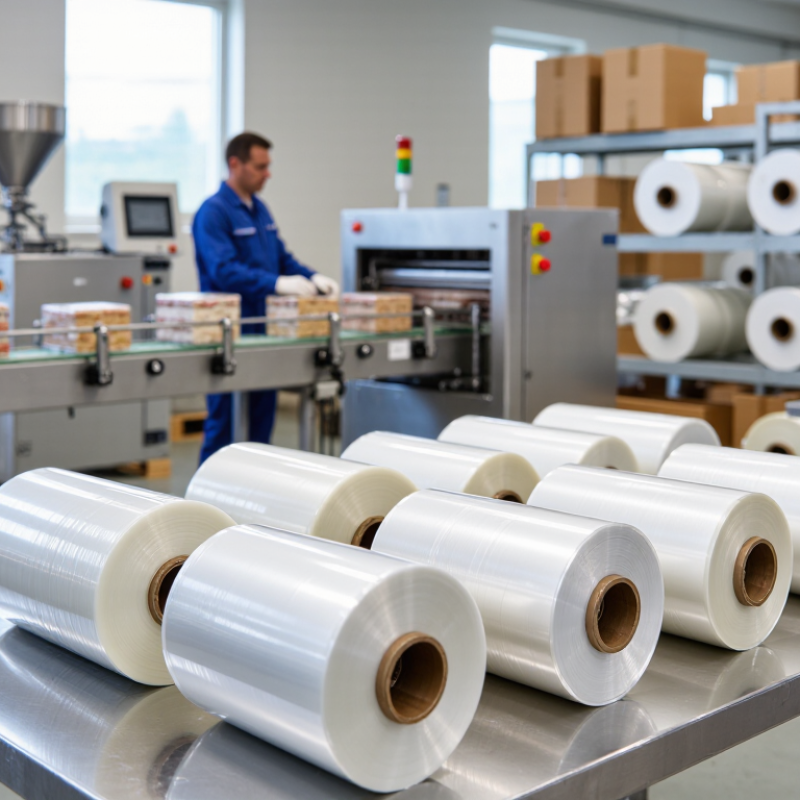
China Top 10 Shrink Film Manufacturers

Understanding Shrink Film and Its Role in Packaging

Shrink film is a thin plastic film that tightens around a product when heated. It can bundle bottles, protect cartons from dust, or hold several small items together. On a packing line, the details matter: film thickness, seal quality, heat settings, and product shape all affect the final wrap. Too much heat can distort a pack; too little can leave loose folds. It sounds simple, but it takes testing.

The OECD’s Global Plastics Outlook (2022) reports that packaging accounts for about 40% of plastic waste generated worldwide. That figure covers plastic packaging broadly, not shrink film alone, but it puts material choices in context. A lighter film may reduce plastic use per pack, yet poor sealing or punctures can create waste too. Recyclability also depends on the film’s material, local collection systems, and sorting facilities. A clear wrap is not automatically recyclable everywhere. Small details count.

For manufacturers comparing shrink films, useful measures include thickness consistency, shrink performance, seal strength, and compatibility with existing equipment. Ask for test data under realistic line conditions, not only ideal laboratory settings. A neat sample roll tells only part of the story. Real production can be messier.

Understanding Shrink Film: Typical Polymer Densities

Polymer density can influence packaging weight and material selection. Values shown are representative midpoints of typical resin density ranges; actual shrink-film properties vary by formulation and manufacturing process.

China’s Shrink Film Manufacturing Industry at a Glance

China’s shrink film industry spans resin processing, film extrusion, printing, and converting. Manufacturers supply packaging for food, household goods, electronics, and logistics. Common materials include polyolefin, polyethylene, and PET-based films, selected for different clarity, strength, and sealing needs. The best fit depends on the product and packing line.

Production often combines blown or cast extrusion with controlled cooling and orientation. Small changes matter. A few microns of thickness variation can affect tearing, shrink behavior, or package appearance. Experienced buyers request measured thickness, shrink performance at stated temperatures, and sample rolls tested on their own equipment. A glossy sample alone proves little.

Capabilities differ widely between factories. Some focus on high-volume standard rolls; others handle custom widths, colors, or printing requirements. Buyers can review traceability, quality records, and whether trial batches match later orders. This takes time. Even careful testing may miss issues caused by storage or changing line speeds. Humidity, core size, and roll tension can also affect handling after delivery.

How to Evaluate Leading Shrink Film Manufacturers

China Top 10 Shrink Film Manufacturers

How to Evaluate Leading Shrink Film Manufacturers

A useful evaluation starts with the film’s actual job. Record the product shape, package weight, sealing method, and line speed before comparing suppliers. A film that performs well on a sample roll may wrinkle or tear on a fast production line. Request data for thickness, shrink ratio, tensile strength, and recommended sealing temperature. Then test the material on your own equipment.

Consistency matters more than a polished brochure. Ask how each production batch is checked and whether the supplier can provide inspection records and traceable batch information. Compare several rolls, not just one. Look for uneven thickness, cloudy areas, weak seals, or loose winding. Small defects can cause downtime. Ask for a sample large enough to run a realistic trial, and note the machine settings used.

Technical support also deserves attention. A responsive manufacturer should explain storage conditions, handling, and adjustments for different package shapes. Ask how they investigate a failed seal or unexpected film break. Clear answers are useful; vague promises are not. One limitation in any comparison is that factory claims can be difficult to verify from a distance. An independent test may add time and cost, but it can reveal problems that a brief demonstration misses. Even then, results may differ when operators or line conditions change.

Profiles of China’s Top 10 Shrink Film Manufacturers

Profiles of China’s Top 10 Shrink Film Manufacturers

A useful comparison of China’s top ten shrink film manufacturers looks beyond production volume. It examines material choices, processing experience, and the support available to buyers. Some manufacturers focus on polyolefin films for retail packs, while others specialize in polyethylene films for larger or heavier goods. There is no single best fit. It depends on the product, packing line, and storage conditions.

The profiles should also consider film thickness, roll width, shrink performance, and clarity. These details affect how neatly a film wraps a box or groups bottles. Ask about sample testing and consistency between production batches. Small differences matter. A supplier with flexible converting options may suit custom pack sizes, while a high-capacity plant may be better for repeat orders. Technical documents and clear communication help buyers check claims, though paperwork alone cannot prove performance.

A careful top-ten overview should distinguish established capabilities from promotional language. Request recent specifications and test samples under real packing conditions. Check how each manufacturer handles defects, delivery changes, and after-sales questions. Rankings can look precise, but public information may be incomplete or outdated. That limitation deserves attention. The strongest profile is not necessarily the largest factory; it is the one whose film performs reliably on the buyer’s equipment.

China Top 10 Shrink Film Manufacturers - Profiles of China’s Top 10 Shrink Film Manufacturers

An anonymized industry overview. The entries below describe common shrink-film product segments and supplier capabilities; they are not verified rankings or claims about individual manufacturers.

Profile Common film type Typical applications Useful supplier checks
1. Polyolefin (POF) film Cross-linked or non-cross-linked POF, depending on product specification Retail multipacks, printed goods, and general consumer-product packaging Film thickness, seal performance, shrink conditions, and machine compatibility
2. Polyethylene (PE) bundling film Shrink-grade PE film, including formats made for heavier packs Beverage multipacks, cartons, and grouped industrial products Load stability, puncture resistance, pack weight, and shrink-tunnel settings
3. PVC shrink film PVC film supplied for specified shrink-packaging uses Selected retail, gift, and secondary-packaging applications End-market restrictions, material compliance, sealing method, and disposal requirements
4. Shrink-sleeve label film Sleeve-grade films such as PETG, PVC, or other specified polymers Full-body or partial-body labels for shaped containers Shrink curve, seam quality, print compatibility, and container geometry
5. Printed shrink-film supplier Printable POF, PE, PVC, or sleeve film, subject to the supplier’s equipment Branded multipacks, promotional packs, and product sleeves Print method, color proofing, registration, artwork requirements, and minimum order
6. Centerfold-film supplier Centerfold rolls for compatible shrink-wrapping equipment Bundling and overwrapping products in semi-automatic or automatic lines Roll width, core size, gauge, folding consistency, and line speed
7. Shrink-bag and shrink-hood supplier Pre-made bags, tubing, or hood formats in suitable shrink materials Pallet loads, large items, and products requiring an outer protective wrap Bag dimensions, film gauge, load shape, sealing requirements, and application method
8. Food-packaging film supplier Food-contact-intended film grades, where supported by documentation Secondary packaging of food products and selected multipacks Applicable food-contact documents, intended-use limits, traceability, and migration data
9. Custom-gauge film supplier Film offered in different thicknesses, widths, and roll formats Packaging lines with defined equipment or pack-size requirements Tolerance range, roll length, width consistency, sample testing, and lead time
10. Application-support supplier Film selected for the product, packaging format, and available machinery Operations needing help with film selection, trials, or process adjustment Technical support scope, trial process, written specifications, and quality-control records

Product availability, material suitability, certifications, and performance vary by supplier and application; confirm specifications and compliance documents directly before purchasing.

Products, Applications, and Key Strengths of Each Manufacturer

China’s shrink-film suppliers serve different packaging needs, from retail multipacks to protective industrial wrapping. One manufacturer may specialize in PVC film for clear retail displays, with crisp folds around small boxes.
Another may produce POF film for food and household goods, offering a smooth finish and reliable sealing. A third may focus on PE film for beverage bundles and heavier loads; its thicker gauges can improve handling strength. Good fit.
A fourth may supply cross-linked POF for irregular shapes, where tight shrink and puncture resistance matter. A fifth may convert printed film for promotional packs, pairing color accuracy with consistent registration.

The remaining manufacturers may focus on specialized production. One can make wide PE film for pallet wrapping and warehouse distribution. Another may offer low-temperature shrink film for heat-sensitive products, though trials are essential.

A producer of recyclable mono-material structures may help simplify packaging choices, but buyers should confirm local recycling options.
A small-batch converter may support custom widths and short runs, useful for testing new packs. The tenth profile is a high-volume supplier serving standard retail and logistics formats, where stable supply can outweigh unusual features.

Ask for film samples, thickness data, shrink curves, and sealing guidance. Results vary by machine settings. That detail is easy to overlook.