How to Choose 318 x 230 Thermal Paper for Global Sourcing?
Choosing 3 1 8 x 230 thermal paper for global sourcing requires more than matching two measurements. The roll must fit the printer, protect printed information, and perform consistently across different climates. A small dimensional error can cause paper jams, blurred receipts, or wasted inventory.
Thermal-paper consultant Elena Marquez explains, “A roll is not just a size; it is a performance promise.” Her point deserves attention. Buyers should verify the exact width, roll length, core diameter, outer diameter, and winding direction before approving samples. Do not rely on a supplier’s title alone.
Paper quality matters too. Check the coating sensitivity, image density, smoothness, and resistance to heat, moisture, oils, and sunlight. A receipt may look clear in a factory sample, then fade inside a hot delivery vehicle. That happened before.
Global sourcing also requires careful documentation. Ask for material specifications, test reports, packaging details, and batch traceability. Confirm whether the paper meets applicable chemical and environmental requirements in the destination market. BPA-free or phenol-free options may support broader compliance, but those claims still need evidence.
A practical sourcing review should compare samples from several manufacturers. Test them in the actual printer model. Check feeding, cutting, curling, and print contrast. Record the results.
Perfection is unlikely.
Suppliers may provide incomplete data, and buyers may overlook storage conditions. Therefore, a reliable purchasing decision combines technical inspection, supplier experience, and realistic field testing. The lowest quotation can become expensive when rejected rolls, service calls, and delayed shipments enter the calculation.
Define the 318 × 230 mm Format: Sheets, Rolls, Cores, and Fit
How to Choose 318 x 230 Thermal Paper for Global Sourcing?
The 318 × 230 mm format usually describes a sheet, not a complete roll specification. Confirm whether 318 mm is the feed direction or the printable width. A small misunderstanding can cause paper jams or cropped receipts. For sheet applications, check corner squareness, cutting tolerance, surface smoothness, and thermal coating uniformity. In practical sampling, a sheet may look correct but still curl after printing. That detail is easy to miss.
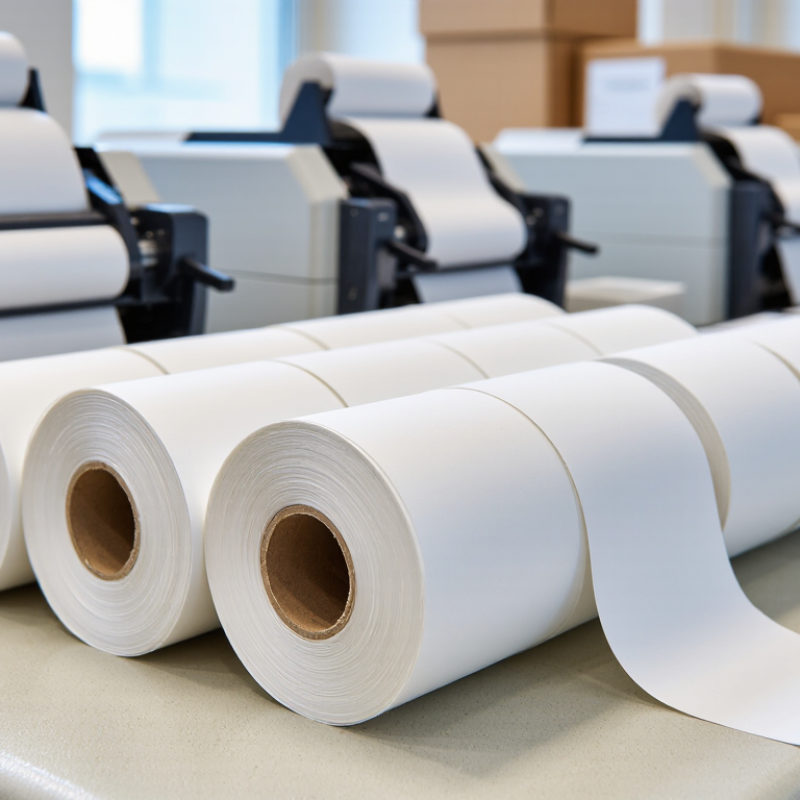
For roll sourcing, provide the finished width, outer diameter, winding direction, and core dimensions separately. A roll measuring 318 mm wide is not automatically compatible with equipment designed for 318 × 230 mm sheets. Core inner diameter, core length, and maximum roll diameter affect loading and machine clearance. Ask for actual samples, not only a technical drawing. Measure them with a ruler and caliper. Some suppliers describe nominal sizes too confidently. Real production can vary.
Tips: State all dimensions in millimetres. Confirm tolerance ranges in writing. Test several rolls or sheets in the target device. Check image density, fading, curl, dust, and cutting accuracy after storage. Keep the packaging dry and flat during transport. If the required format is uncertain, photograph the existing paper beside a measurement scale. It is not perfect evidence, but it often reveals orientation and fit problems early. Also request the paper weight, thermal sensitivity, and recommended storage conditions before approving mass production.
Compare 48–80 g/m² Thermal Stock Using ISO 536 Grammage Testing
For global sourcing, a 318 x 230 mm thermal sheet needs more than a nominal weight comparison. Grand View Research valued the global thermal paper market at approximately USD 4 billion in 2023. Its forecast also indicates continued growth through the decade. That pressure makes lightweight stock attractive, but lower weight can reduce stiffness and handling confidence.
ISO 536 grammage testing measures mass per square metre under controlled conditions. A 318 x 230 mm sheet has an area of 0.07314 m². At 48 g/m², one sheet weighs about 3.51 grams. At 80 g/m², it weighs about 5.85 grams, excluding packaging. That difference affects carton weight, feeder performance, and transport cost. I would test 48, 60, 70, and 80 g/m² samples using the same conditioning process. ISO 187 is useful for conditioning near 23°C and 50% relative humidity.
Weight alone can mislead. A lighter sheet may still deliver sharp printing if its thermal coating is well controlled. However, curl, surface friction, and image fading require separate checks. Smithers’ thermal paper outlook identifies retail and logistics as important application areas, where reliable feeding matters daily. In receiving inspections, I would record actual grammage, caliper, moisture, and print density. Small deviations become visible in long runs. The first specification is rarely perfect. That is worth remembering.
Evaluate Sensitivity, Print Density, and Image Life Before Purchasing
How to Choose 318 x 230 Thermal Paper for Global Sourcing?
For 318 x 230 mm thermal paper, sensitivity is the first practical checkpoint. High sensitivity can create darker images at lower printer energy, reducing battery use. However, excessive sensitivity may trigger gray backgrounds during storage or transport. Smithers’ The Future of Thermal Printing to 2029 identifies energy efficiency and print consistency as major purchasing priorities. Request samples from at least three production lots. Print the same test chart at several heat levels. Small differences become visible quickly.
Print density should be measured, not judged by eye. Use a calibrated optical densitometer and record solid-fill density, edge sharpness, and background whiteness. A useful receiving target is often a solid black density near 1.20–1.40, but the correct range depends on the printer and application. ISO 24790 provides a practical framework for evaluating print quality attributes, although thermal paper buyers still need application-specific limits. I have seen dark samples fail because fine characters spread after repeated printing.
Image life requires controlled evidence. Test printed sheets at room temperature, elevated heat, humidity, and light exposure. ISO 18916 supports standardized evaluation of image stability, while industry durability studies commonly separate dark stability from light fading. Ask suppliers for results at 23°C/50% RH and accelerated conditions. Five years in a clean archive is not equal to five years inside a hot vehicle. That difference is easy to miss. Purchase decisions should include lot traceability, coating uniformity, core dimensions, and a written storage limit. One weakness remains: supplier test data may not reproduce your printer settings.
Verify BPA Compliance with REACH’s 0.02% Thermal-Paper Limit
When sourcing 318 x 230 thermal paper, size is only one specification. The coating may still contain restricted chemicals. For European distribution, verify that bisphenol A (BPA) remains below REACH’s 0.02% by-weight limit.
Ask the supplier for a recent laboratory report covering the exact paper grade and production batch. A general declaration is not enough. The report should identify BPA results, test methods, sample details, and laboratory accreditation. Request supporting technical data, including the coating structure, basis weight, roll or sheet dimensions, and storage conditions. Keep a retained sample from each approved batch. That small step helps when documents and shipments do not match.
Do not assume “BPA-free” means fully compliant or automatically safer. Some suppliers replace BPA with other developers, which require separate chemical review. Check whether the intended destination applies additional requirements beyond REACH. A 318 x 230 sample should also pass practical checks, including image density, print contrast, curl, dust, and readability after heat exposure. Minor dimensional changes can affect printer feeding. I have seen paperwork look complete while the actual coating performed poorly. That is worth questioning. Verify before scaling the order.
How to Choose 318 × 230 Thermal Paper for Global Sourcing?
Verify that the supplier’s BPA test result is below the REACH thermal-paper restriction threshold of 0.02% by mass. This equals 200 mg/kg, or 0.2 g of BPA per kilogram of thermal paper.
The 318 × 230 mm sheet size has an area of 73,140 mm². When reviewing a certificate of analysis, request the BPA result in mg/kg and confirm that it is below 200 mg/kg. Results at or above 200 mg/kg do not meet the stated REACH threshold.
Validate Barcodes Against ISO/IEC 15416 Print-Quality Grades
When sourcing 318 x 230 thermal paper globally, barcode performance deserves more attention than sheet size. A clean-looking label can still fail verification.
Use a calibrated barcode verifier, not a phone camera. Test the actual paper, printer settings, ribbon-free thermal surface, and intended barcode size. ISO/IEC 15416 evaluates printed linear barcodes through measurements such as symbol contrast, modulation, defects, decodability, and edge contrast.
The verifier should provide scan grades across multiple positions. Review the average grade and every weak scan, rather than relying on one successful reading.
Aim for a stable grade suitable for your application. Higher grades provide more margin when labels face transport, heat, dust, or repeated scanning. Check quiet zones carefully. A narrow blank area beside the bars may reduce decodability, even when the bars appear sharp. Also inspect small text, uneven darkness, and pale sections near the sheet edges.
Thermal coatings can behave differently after weeks in storage. A sample may pass today and fade later. Store test sheets in controlled conditions, then repeat verification after aging and handling.
I have seen strong first-run results weaken after changing print speed by a small amount. That detail is easy to miss.
Document the paper batch, print temperature, speed, barcode dimensions, and verifier results. Some sourcing teams test only one sheet, which is not enough evidence for dependable international supply.