How to Choose the Right Product Bottles for Your Business?
Choosing the right Product Bottles is a practical business decision, not just a packaging choice. The bottle must protect what is inside, work with filling equipment, and feel right in a customer’s hand. A cap that leaks during delivery or a label that wrinkles around the shoulder can undermine an otherwise strong product. Small details matter.
The market is substantial. Grand View Research estimated the global plastic bottles market at USD 157.2 billion in 2023, with projected growth through 2030. That figure signals scale, but it does not mean plastic suits every product or brand. Compare materials, capacity, shape, closure, and decoration against your actual product and sales channel. A glass bottle may offer a premium feel, yet add shipping weight. A lightweight container may reduce transport demands, but still needs adequate protection. There is no perfect option.
Circular design also deserves attention. The Ellen MacArthur Foundation, established by circular-economy advocate Ellen MacArthur, describes its goal as “designing out waste and pollution, keeping products and materials in use, and regenerating natural systems.” Apply that principle carefully: check whether local recycling systems accept your chosen material, and avoid assuming that a recyclable label guarantees recovery. Start with samples. Fill them. Test the caps, labels, and handling before committing to a large order. A few trial bottles can reveal problems that a polished specification sheet misses. That is not glamorous, but it is useful. This guide will help you weigh those trade-offs and select Product Bottles that fit your product, operations, and customers.
Define Your Product’s Packaging Requirements
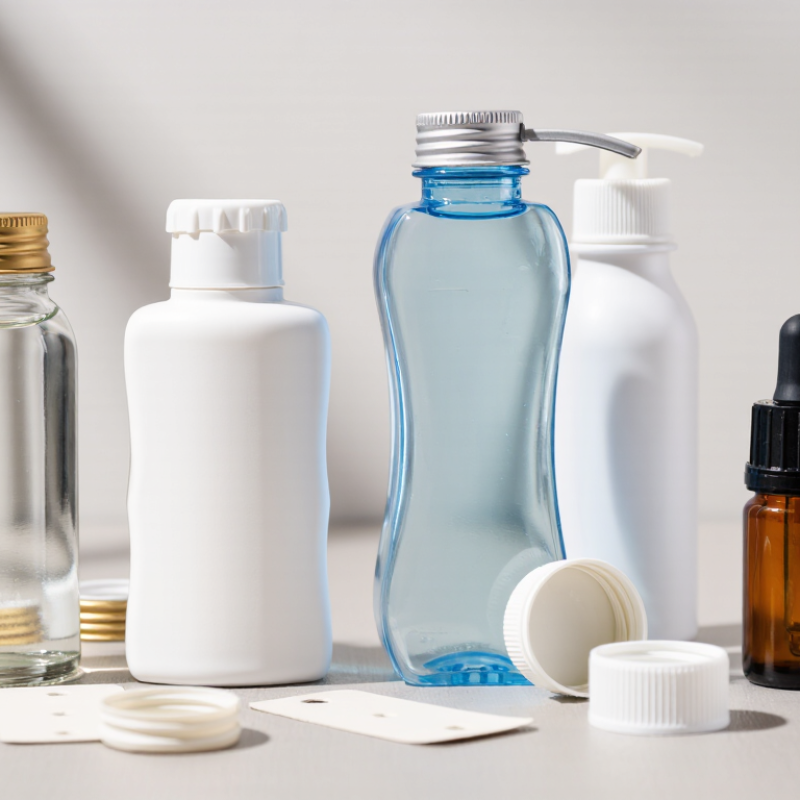
Define the product’s needs before comparing bottle shapes. Record its viscosity, acidity, fragrance oils, light sensitivity, and storage temperature. These details affect material choice, wall thickness, closure, and barrier needs. A thin liquid may need a narrow opening to control pouring; a thick cream may need a wider mouth or pump. Small details matter. Check that the closure seals reliably and that staff can fill and label the container using existing equipment.
Packaging waste is also a practical design constraint. The OECD’s Global Plastics Outlook reports that packaging generated 40% of global plastic waste in 2019. That figure does not mean one material suits every product, but it makes avoidable weight and oversized bottles worth reviewing. In the United States, the EPA reported that containers and packaging made up 28.1% of municipal solid waste generation in 2018. Treat these figures as context, not a substitute for product testing.
Test filled samples under realistic conditions: storage temperature, transport vibration, repeated opening, and contact with the actual formula. Check for leaks, scent changes, paneling, and label lift. A bottle that works on a desk may fail in a warm delivery van. Measure fill speed and usable shelf space, too. Appearance can dominate early discussions; we have to admit that it is easy to overlook handling until problems show up. Keep written test results, and revisit the specification when the formula or distribution route changes.
How to Choose the Right Product Bottles for Your Business: Define Your Product’s Packaging Requirements
Start by matching bottle capacity to how customers use your product. These are common nominal fill sizes, not regulatory standards; confirm the right size based on your product, market, and filling process.
Choose a Bottle Material That Fits Your Product
A bottle is part of the product’s protection system, not just its container. Start with what the formula needs: a barrier against moisture, oxygen, light, or aroma loss. PET is lightweight and clear, making it useful when customers need to see the contents. HDPE is opaque and sturdy, which can help protect light-sensitive products and withstand everyday handling. Glass offers a strong barrier and resists many product interactions, but it is heavier and can break. Test it filled.
The U.S. EPA’s 2018 Advancing Sustainable Materials Management report estimated PET bottle-and-jar recycling at 29.1%. Glass containers were estimated at 31.3%. These U.S. recovery figures describe material streams, not the outcome for every bottle or local collection system. For a real product, check compatibility with its oils, acidity, fragrance, and intended storage temperature. Run filled-pack trials, then inspect for leaks, odor changes, discoloration, or bottle distortion. A clear bottle looks reassuring, but appearance alone is not proof of compatibility. I would treat a promising lab result as provisional until the packaged product has been stored and handled under realistic conditions.
Select the Right Bottle Size, Shape, and Closure
Bottle choice begins with the product’s real use, not a catalogue photo. Match capacity to the amount customers finish in one sitting, then test how the bottle feels when full. A narrow profile can save shelf space, while a wider base may feel steadier in transit. Check labels, cartons, and filling equipment together; a small change in shoulder shape can disrupt an otherwise tidy line. The closure must suit the product’s thickness and use: pumps work for controlled dispensing, while screw caps are simple to reseal. Confirm neck-finish compatibility before ordering.
McKinsey’s 2023 U.S. consumer survey found that around 60% of respondents were willing to pay more for sustainable packaging. That makes material and recyclability worth considering, but local collection systems vary. The U.S. EPA’s 2018 report counted 82.2 million tons of containers and packaging in municipal solid waste. Lighter packaging may reduce shipping weight, yet it still needs to protect the product. One prototype can look perfect and leak after a warm delivery test. Test it.
Tips: Fill sample bottles with your actual product. Check leakage, grip, label fit, and closure performance after handling and temperature changes. Record cap torque and dimensions for repeat orders. Don’t skip this step. A beautiful bottle that is awkward to open may not earn a second purchase.
Check Safety, Compatibility, and Regulatory Needs
A bottle is not safe just because its material code looks familiar. Define the product’s pH, oil or alcohol content, viscosity, filling temperature, and shelf life. Request material composition, migration or extractables data, and a written compatibility statement from the supplier. Run practical trials: fill samples, seal them, store them upright and sideways, then check for leaks, odor, discoloration, swelling, and label lift. Test again after temperature changes. Small leaks matter.
Requirements depend on the product and sales market. For food-contact packaging in the United States, check applicable FDA requirements. In the EU, confirm compliance with Framework Regulation (EC) No 1935/2004 and relevant good manufacturing practice rules. Keep supplier declarations, test methods, lot records, and change-control documents together. “Food safe” on its own is not enough. Ask what conditions the evidence covers. Cosmetics and pharmaceuticals may have different requirements, so involve a qualified compliance specialist before approving artwork or tooling.
The scale makes careful choices worthwhile. The US EPA reported that containers and packaging generated 82.2 million tons of municipal solid waste in 2018, or 28.1% of the total. That figure covers many formats, not bottles alone. Still, it shows why lightweighting or recycled content should not outrun safety checks. I recheck closure fit after supplier changes; it is easy to miss. A short pilot run can reveal stress cracks, paneling, or product seepage before a full order.
Compare Suppliers and Test Your Bottle Choice
Compare suppliers using the same specification sheet, not glossy sample photos. Ask for bottle resin, neck finish, wall thickness, capacity tolerance, minimum order, lead time, and defect policy. Request production samples from each shortlisted supplier. Measure filled weight, check cap fit, and inspect seams under bright light. Small differences matter. A slightly loose closure can become a costly leak after shipping.
Then test bottles with your actual product, closure, filling method, and shipping carton. Check for leakage, paneling, label adhesion, and cap movement after storage and handling. ASTM D5276 provides a recognized free-fall drop-test method for loaded containers; adapt the test conditions to your distribution route. PwC’s 2024 Voice of the Consumer Survey reported that consumers were willing to pay an average 9.7% more for sustainably produced or sourced goods. That is a broad consumer signal, not proof that any one bottle will sell better. Ask suppliers for recycled-content documentation and traceability, then compare performance alongside price. The cheapest quote can look convincing. It may not survive your filling line. I would retest after any material or mold change; that step is easy to overlook, and frustratingly so.